


Image by Magnific.com
You went in for routine bloodwork or a fertility workup. The results came back, and there’s a number attached to your future now: a low AMH reading. Along with it came a sentence you weren’t expecting. There isn’t much we can do. But for many women, there are natural ways to improve AMH levels and support ovarian reserve that most conventional workups never mention.
That sentence gets repeated more than it should. And it leaves out a significant part of the picture.
Whether you’re actively trying to conceive, getting a baseline before you’re ready to start, or navigating early perimenopause and trying to understand what’s shifting in your body, a low AMH number is not a final answer. Here’s what it actually means, what it doesn’t, and what you can do about it.
What Is AMH?
AMH stands for Anti-Mullerian Hormone. The small, developing follicles in your ovaries produce it. The more of those follicles you have active at any given time, the more AMH your body produces. Clinicians use it as a marker of ovarian reserve: a way to estimate how many eggs remain available in your reproductive pool.
A blood test measures it, and levels stay relatively consistent throughout your menstrual cycle, which makes it a more reliable snapshot than some other hormones. A normal result doesn’t guarantee fertility, and a low result doesn’t mean pregnancy is off the table. AMH measures quantity, not quality, and that distinction matters more than most doctors tell their patients.

Image by Magnific.com
What a Low AMH Number Does and Doesn’t Mean
AMH reflects how many follicles are actively developing in your ovaries at the time of the test. It does not measure whether those eggs are healthy. A woman with low AMH can have viable, high-quality eggs. A woman with high AMH can have poor egg quality. The number alone tells you one piece of the picture.
AMH also fluctuates more than conventional medicine typically acknowledges. Vitamin D status, stress levels, inflammatory load, and seasonal variation can all influence a reading. It is not a fixed biological constant. Women who retest under different conditions, or after addressing some of the factors we’ll cover below, often see different numbers.
The conventional response to low AMH is fairly narrow: monitor the decline, consider accelerating IVF timelines, or in some cases begin a conversation about donor eggs. That approach treats AMH as a verdict rather than a variable, and it doesn’t account for the environment the follicles are living in or what happens when you change that environment.
What’s Actually Happening in the Ovaries
Follicles don’t exist in isolation. They’re embedded in living tissue, dependent on blood flow, sensitive to inflammation, affected by oxidative stress, and responsive to the hormonal signals your body sends. A follicle in a poorly perfused, inflamed, nutrient-depleted environment is going to behave differently than one in a well-supported system.
This is the part of the biology that the “there’s nothing you can do” framing ignores. Nobody is suggesting you can grow new eggs. What the research does support is that the follicles already present can be better protected from damage, better supported through the recruitment process, and more responsive when the body’s overall environment improves. When that happens, AMH readings improve too.
The question worth asking isn’t just how many follicles you have. It’s what kind of environment they’re living in and what’s affecting their function.
What Acupuncture and Chinese Herbal Medicine Do
Acupuncture has a well-established history in reproductive medicine. What’s grown significantly in recent years is the clinical evidence explaining why it works and how it can naturally improve AMH levels in women with diminished ovarian reserve.
A 2023 meta-analysis reviewed 13 randomized controlled trials involving 787 patients with diminished ovarian reserve. Acupuncture produced measurable improvements in the key markers: FSH came down, antral follicle count (the number of follicles visible on ultrasound in a given cycle) went up, and AMH levels increased. The research also found that combining acupuncture with Chinese herbal medicine produced stronger outcomes than acupuncture alone.
Acupuncture improves blood flow to the ovaries and uterus by relaxing blood vessel walls. Follicles that receive better circulation get more oxygen, more nutrients, and clearer hormonal signaling. That directly affects how they develop. Acupuncture also reduces systemic inflammation and supports the brain-ovary hormonal communication loop that governs how follicles are recruited each cycle. Elevated cortisol from chronic stress actively disrupts that loop. Acupuncture is one of the more well-researched interventions for bringing cortisol down and restoring that balance.
Chinese herbal medicine works alongside acupuncture to address what’s specific to each person. Chinese medicine understands diminished ovarian reserve through the lens of Kidney essence, the constitutional reserve that governs reproduction and the aging process in TCM. It’s a framework for understanding why two women with the same AMH number can present entirely differently and need entirely different treatment. We build custom formulas around your particular pattern, which is why an individualized intake matters.
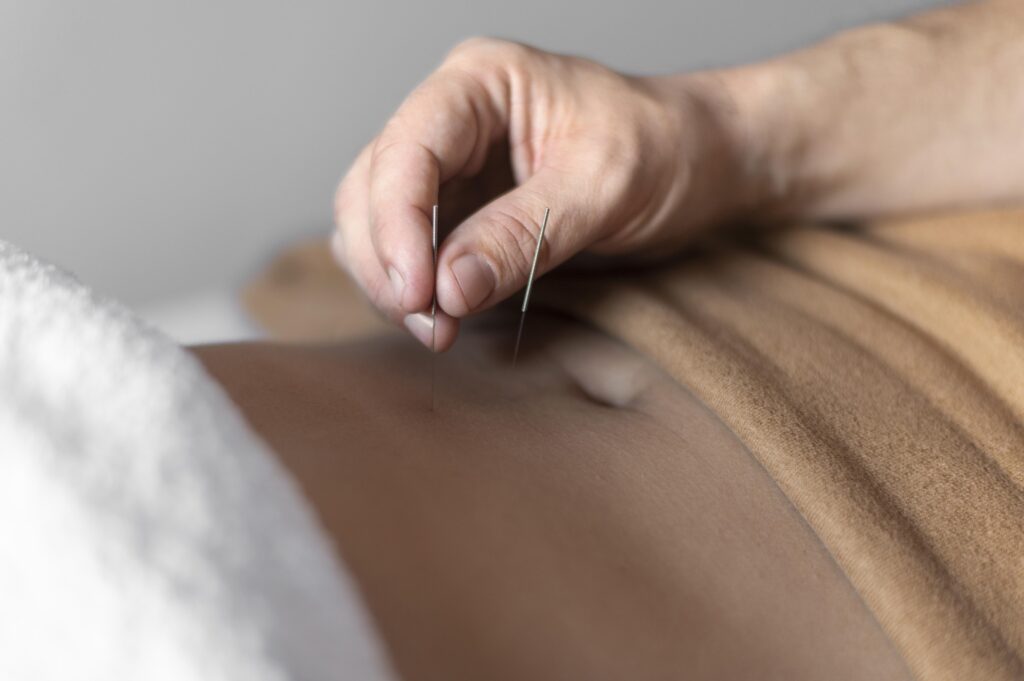
Image by Magnific.com
The Factors That Affect Follicle Health
Acupuncture and herbal medicine work better when the basics are also addressed. These are a part of the whole picture, and are necessary to see positive results.
Chronic stress is one of the most underestimated drivers of reproductive dysfunction. Elevated cortisol suppresses the hormonal signals that follicles depend on, and most people are running at a stress level that their fertility workup never accounts for. Bringing it down is a clinical priority.
Nutritional status has a direct effect on ovarian function. Vitamin D deficiency is consistently linked to lower AMH across the research. CoQ10 supports the mitochondria inside follicle cells, which need significant energy to function properly. Omega-3 fatty acids reduce the inflammatory environment that accelerates follicle loss. These are not trendy supplements. They are inputs that follicles depend on to work.
Toxin exposure matters over time. Endocrine-disrupting chemicals found in plastics, pesticides, and many personal care products interfere with the hormonal environment inside the ovaries. Reducing exposure where possible, filtering drinking water, choosing glass containers, reading ingredient labels, has cumulative effect even if the impact of any single change feels small.
Most fertility workups overlook sleep entirely. Melatonin, produced during deep sleep cycles, has direct antioxidant effects on ovarian tissue. Women who chronically under-sleep are compromising their follicular environment in a way that never shows up on a standard fertility panel.
At Austin Transformational Health, we look at all of these factors together. Comprehensive hormone panels through Evexia Diagnostics give us AMH alongside FSH, LH, estradiol, and other relevant markers so we can understand what’s actually driving the reading before we build a care plan. Context matters. A single number rarely tells the whole story.
If You’re Not Trying to Conceive: AMH and Perimenopause
Low AMH doesn’t only come up in fertility conversations. For women in their late 30s and 40s who aren’t focused on pregnancy, AMH is often one of the first signals that the perimenopausal transition has begun, sometimes years before cycles shift or other hormone levels move out of range.
That early signal is worth paying attention to. A declining AMH in perimenopause doesn’t mean you need to do anything dramatic. It means your ovarian environment is changing, and the factors that support follicle health in a fertility context are the same ones that support hormonal stability through the perimenopausal transition. Women who come in for support during this window often find that a well-supported ovarian environment translates into fewer and less severe symptoms as estrogen and progesterone begin to fluctuate more widely.
Whether pregnancy is the goal or not, the approach is the same: understand what’s driving the hormonal picture, address the factors you can influence, and give the body what it needs to navigate the transition more smoothly.
Where to Start
If you’ve received a low AMH result and feel like you’ve been handed a dead end, the next step is to get a fuller picture before drawing any conclusions. Improving AMH levels naturally is not a guarantee, but it is a legitimate clinical goal and one we work toward with every patient who comes in with this diagnosis.
Getting there means testing AMH alongside the hormones it works with, not as a standalone number, looking at what might be contributing to the reading, and working with someone who can address the underlying pattern rather than just tracking the decline.
At Austin Transformational Health, we work with women at every stage of this: early fertility planning, active TTC, low AMH diagnosis, and perimenopausal transitions. Care is always individualized because no two women arrive with the same pattern, and the same number on a lab report can mean very different things depending on everything else going on in the body.
If you’re in Austin and want to understand your numbers more fully, we are here for you.
Ready to explore a root-cause approach to your AMH levels? Schedule a consultation with Dr. Bryn and let’s look at the full picture.
Want to learn more about our functional medicine testing and services?
Questions? Contact us or check out our FAQ!
Dr. Bryn Kanuck is a Licensed Acupuncturist and Doctor of Acupuncture and Chinese Herbal Medicine practicing at Austin Transformational Health in Austin, TX. This post is for educational purposes and does not constitute medical advice. Always consult a qualified healthcare provider regarding your individual health concerns.

