


Image by Magnific
Cyclosporiasis cases are climbing fast this summer, and Texas is one of the states affected. As of July 6, Texas has confirmed 48 cases matching the CDC’s outbreak case definition, with 5 hospitalizations and no deaths reported. Michigan has logged nearly 700 cases as of early July, about 13 times its typical yearly total. Ohio has confirmed 177 cases across 43 counties. The CDC separately reports 145+ cases across 17 states since May, with 20 hospitalizations. The scale is unusual enough that health officials in multiple states are actively investigating.
If you’ve had unexplained, lingering GI symptoms this summer, it’s worth understanding what this parasite does, and why a standard stool test might not catch it.
What Is Cyclospora, and How Does It Spread?
Cyclospora cayetanensis is a microscopic parasite that infects the small intestine. It spreads when people eat food or drink water carrying traces of human feces, most often imported fresh produce. Investigators have traced past outbreaks to raspberries, basil, cilantro, snow peas, and mesclun lettuce. It does not spread person to person.
Symptoms typically show up about a week after exposure, though the range runs from two days to two weeks.
Symptoms to Watch For
The hallmark symptom is watery diarrhea, sometimes described as explosive. Other common symptoms include:
- Abdominal cramping and bloating
- Loss of appetite
- Fatigue
- Low-grade fever
- Nausea (vomiting is less common)
Without treatment, symptoms can persist for weeks and may wax and wane, sometimes appearing to resolve before returning.
The Testing Gap Most People Don’t Know About
Routine stool testing often doesn’t look for Cyclospora at all, and that matters if you’re trying to figure out what’s going on in your gut.
The CDC is direct about this: testing for Cyclospora isn’t part of routine stool testing at most U.S. labs, and providers frequently need to request it by name. Not every gastrointestinal PCR panel includes a target for this parasite either, so even a “comprehensive” molecular stool panel can miss it if that specific test didn’t include Cyclospora.
There’s a second problem layered on top of that. Cyclospora sheds oocysts (its infectious form) intermittently and often in low numbers, even in people with active, severe diarrhea. A single stool sample can come back negative even when someone genuinely has the infection. The CDC’s own guidance recommends collecting three or more samples on different days to improve detection odds with standard microscopy.
Put simply: a negative result on a routine stool test doesn’t rule out cyclosporiasis. It may just mean the test wasn’t looking for it, or the sample happened to land on a low-shedding day.
Why GI-MAP Testing Is Different
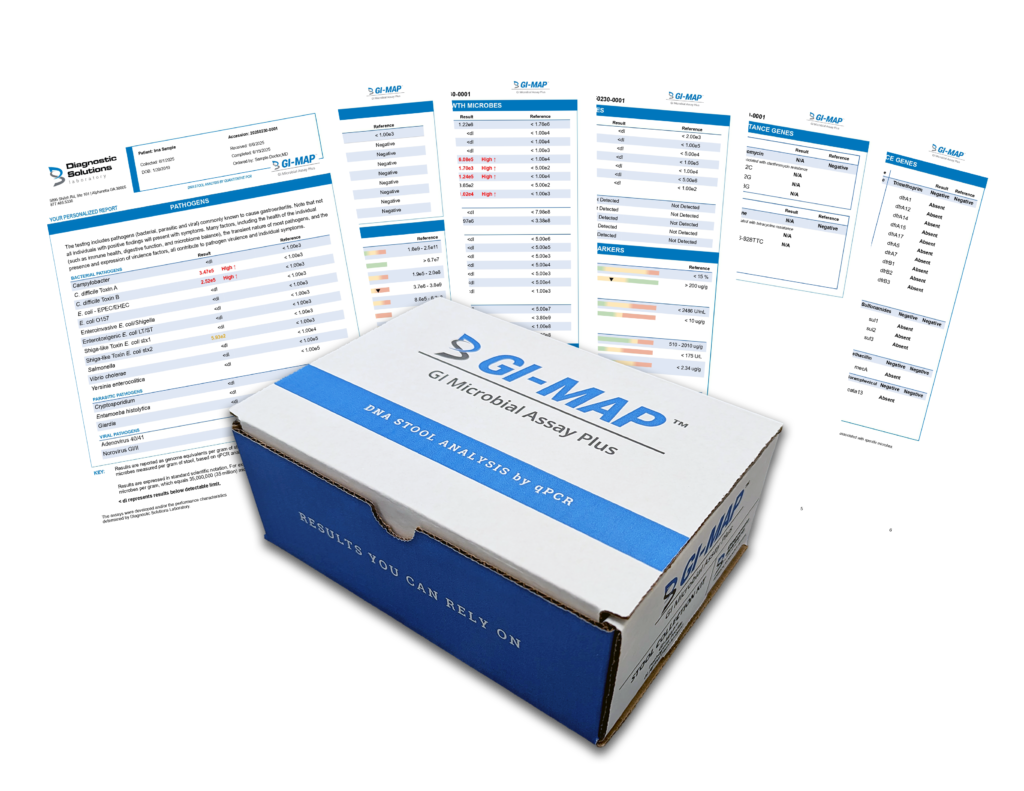
The GI-MAP (GI Microbial Assay Plus) is a DNA-based stool test that screens for a wide panel of organisms, including Cyclospora, from a single sample. Because it uses quantitative PCR technology to detect the parasite’s genetic material directly, it doesn’t rely on catching visible oocysts under a microscope on the right day.
Alongside Cyclospora, the same panel covers other parasites, bacterial pathogens, opportunistic organisms, and markers of gut inflammation and digestive function. That gives a fuller picture of what’s happening in the gut, not just a yes-or-no answer on one organism.
Dr. Bryn’s Functional Approach to a Positive Result
When a GI-MAP comes back positive for Cyclospora or another pathogen, Dr. Bryn’s approach starts with pattern differentiation rather than a one-size-fits-all protocol. Dr. Bryn addresses acute infections with targeted, heat-clearing herbal antimicrobials, since this class of formula works best short-term rather than as long-term maintenance.
Once the acute phase resolves, attention shifts to rebuilding gut terrain: supporting the intestinal lining, rebalancing the microbiome, and addressing whatever the GI-MAP’s functional markers flagged along the way. The goal isn’t just clearing the organism. It’s making sure treatment also addresses the gut environment that let it take hold.
Already Taken Antibiotics? Your Gut May Need Extra Support
Antibiotics can clear a Cyclospora infection, but they don’t distinguish between the parasite and the beneficial bacteria your gut relies on. A course of antibiotics this summer, whether for cyclosporiasis or another GI infection, can leave the microbiome depleted and the gut lining more vulnerable than before you got sick.
If you’ve recently finished antibiotic treatment and still don’t feel like yourself, that’s worth addressing directly rather than waiting it out. We build custom recovery protocols and supplement plans at our clinic to help rebuild the microbiome and support the gut lining after antibiotic use, tailored to what your GI-MAP shows rather than a generic probiotic recommendation.
What to Do If You Suspect Cyclosporiasis
If you’ve had sudden, ongoing watery diarrhea this summer, especially lasting more than a few days, it’s worth getting evaluated. When you do, be specific: ask whether the stool test that is being ordered actually includes Cyclospora, since labs often leave it out by default.
If you’d rather start with a test built to look for it directly, alongside a broader read on your gut health, that’s exactly what GI-MAP testing does.

