

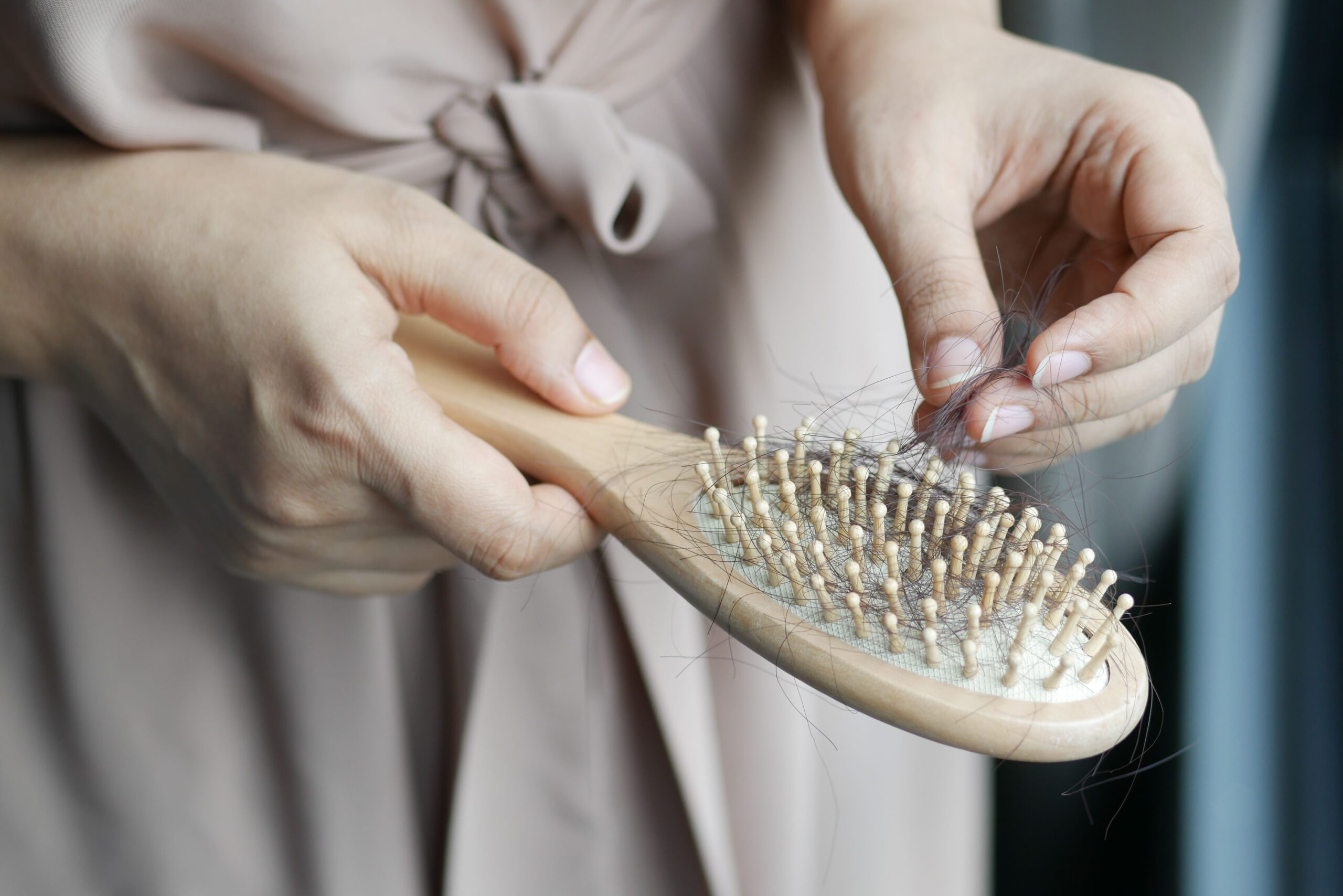
You’ve switched shampoos.
You’ve tried a biotin gummy.
You’re still finding more hair in the shower drain than you’d like.
If this sounds familiar, you’re far from alone. Genetics rarely tells the whole story. Hair loss usually has several causes working together, and you can identify most of them once you know where to look.
It’s Not Always Genetics or Aging
Androgenetic alopecia (the genetic, pattern-based kind) is common. But a lot of hair loss doesn’t fit that pattern. It shows up as diffuse thinning, sudden shedding, or a change after a stressful period or illness. Doctors call this telogen effluvium. Unlike genetic hair loss, it often reverses once you address the underlying cause.
The Thyroid Connection
Hair follicles contain thyroid hormone receptors. That’s part of why both an underactive and an overactive thyroid can thin your hair. A comprehensive biochemical study linked hair loss in women to thyroid-stimulating hormone and free T4 levels, alongside other markers. Standard screening often stops at TSH alone. That misses the subtle dysfunction a fuller thyroid panel can catch.
The Iron and Ferritin Connection
This is one of the best-documented and most overlooked causes, especially in women. A systematic review and meta-analysis found consistently lower serum ferritin in people with telogen effluvium than in the general population. The tricky part is that ferritin can sit in a technically “normal” range on standard labs and still run too low for healthy hair growth. Several researchers consider a ferritin level above 40-60 ng/mL more supportive of hair health than the low end of a standard reference range.
Zinc and Other Micronutrients
Zinc deficiency shows up again and again in hair loss research. One study found zinc deficiency significantly more common in patients with telogen effluvium than in healthy controls. Vitamin D and B12 often run low in the same patients. Basic panels rarely flag these nutrients unless someone specifically orders the tests.
The Gut Absorption Connection
Your nutrient levels depend on what your gut absorbs as much as what you eat. Low stomach acid, gut inflammation, or an imbalanced microbiome can all reduce how well you absorb iron, zinc, and B vitamins, even on a good diet. That’s why someone can eat well, supplement diligently, and still test low. The gut is where that chain often breaks down.
The Stress and Cortisol Connection
A stressful event, physical or emotional, classically triggers telogen effluvium. Shedding usually starts two to three months after the event. Chronic stress keeps cortisol elevated, and high cortisol pushes hair follicles out of their growth phase and into shedding sooner than they should. That delay between stressor and hair loss explains why people rarely connect the two.
Hormonal Shifts: Postpartum and Perimenopause
Hormone changes commonly trigger temporary hair shedding. Postpartum hair loss is extremely common a few months after delivery, as estrogen drops back down from its pregnancy highs. Perimenopause and menopause bring a similar shift. We cover the broader hormone picture in our estrogen patch shortage and HRT guide, since the same hormone changes often affect sleep, mood, and hair.
What About Hair Growth Supplements?
A lot of popular hair growth supplements use a similar formula: saw palmetto to address DHT, an adaptogen like ashwagandha for stress, marine collagen for keratin building blocks, and a blend of biotin, zinc, and other vitamins. These ingredients are reasonable, and the research behind several of them is genuine. The problem is cost. One well-known subscription brand runs $70 to $90 a month. It recommends a three-to-six-month trial before you judge results. That adds up to several hundred dollars before you know whether it works for you.
Austin Transformational Health carries a comparable, prescription only formula: Cosmedix by Ortho Molecular Products. It combines saw palmetto, MSM, biotin, and a full spectrum of hair-supportive vitamins and minerals, at roughly a third of the cost. Here’s the honest caveat for both options: a general hair-support supplement takes a broad-spectrum approach. It supports overall hair health, but it doesn’t target your specific root cause. If low ferritin drives your hair loss, a general formula won’t fix an iron deficiency. If your thyroid drives it, no amount of biotin changes that. These supplements can help, and they work best as a complement to finding your actual cause.
Why Testing Beats Guessing
At Austin Transformational Health, Dr. Bryn Kanuck uses a broader testing approach to find what actually drives hair loss, including:
- A full thyroid panel, not just TSH, to catch thyroid-driven hair loss that standard screening can miss
- Ferritin and iron studies, since “normal” on a standard range doesn’t always mean adequate for hair growth
- GI-MAP stool testing to assess gut absorption and find what may block nutrients from reaching your follicles
- Broader functional testing for zinc, vitamin D, and B12 status
From there, Dr. Bryn builds a protocol around your results, rather than a one-size-fits-all supplement regimen.
Find the Actual Cause
Hair loss is frustrating, and it’s tempting to reach for whatever product promises the fastest fix. A general hair-support supplement and a protocol based on your actual labs do different jobs. The first can help at the margins. The second addresses what’s actually going on.

